Large ponds rarely see a decline in the water level all at once. The change is gradual, and clarity fades until the water reads as flat and untended from every angle. Owners tend to blame the season or the fish stock. The real gap is usually circulation, and a fountain pond answers water quality and appearance together.
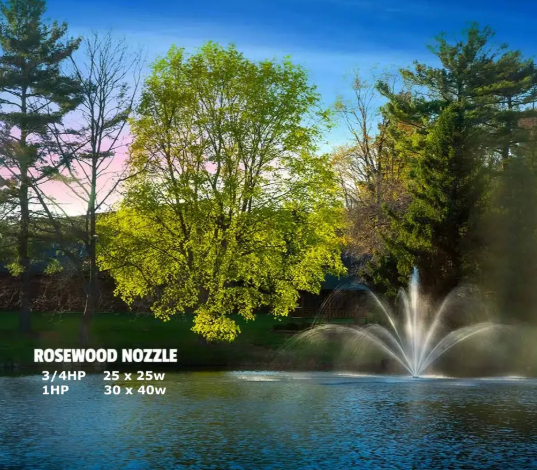
A properly sized fountain pond setup keeps a large body of water in motion all day and draws oxygen-poor water up toward the surface where trapped gases can escape. The spray carries across open water, so the feature reads clearly from the far bank instead of fading out at a distance.
What still water costs a large pond
Layers Form Below the Surface Within Weeks: A pond without steady circulation separates into temperature layers, and the lower layer runs short of oxygen within weeks of warm weather. Organic matter settles there and breaks down slowly, which releases stored nutrients back into the water. Algae feeds on those nutrients first, and clarity drops before anything looks wrong up top.


Waiting Narrows the Options That Remain: Postponing aeration limits what can be corrected later without heavy equipment. Sediment thickens each season, and fish crowd into shrinking pockets of oxygenated water. In routine pond management work, technicians regularly encounter properties where owners waited years and then faced dredging costs far beyond the price of a fountain installed early.
See also: How Affordable Supplements Can Help You Achieve a Healthier Lifestyle
Matching output to the size of the water
Net Flow Rate Tells You More than a Horsepower Label: Net flow rate is the figure that matters when sizing a fountain for a large pond, because it shows how much water actually reaches the air each minute. Horsepower claims on discount units mislead buyers, since a motor advertised as one horsepower may deliver output closer to a third of that.
Pond Size Sets the Range of Suitable Units: Compact submersible pumps handle small ornamental water features, while ponds spanning half an acre or more call for floating models built for continuous duty. Surface area and average depth both affect how far circulation travels outward. A fountain pond planned around real measurements moves the whole volume rather than one corner.
Aeration that supports fish through the warm months
Oxygen Enters the Water at the Surface: Fish depend on dissolved oxygen that crosses into the water at the surface, and a fountain multiplies that exchange by breaking spray into droplets before they fall back. Warm water holds less oxygen than cool water, so demand climbs as supply drops. Decaying leaves and fish waste raise biochemical oxygen demand through summer.
Even Circulation Reaches Every Corner of the Basin: Moving water carries oxygen outward from the fountain and pulls cooler bottom water upward, which keeps temperature and oxygen closer to even across the pond. Fish spread out instead of schooling in one shallow area. Aquatic plants hold better color, and mosquito larvae lose the still surface they need to develop.
Floating display or hidden diffusion
Floating Units Deliver Aeration You Can See: Floating fountains handle circulation and appearance at the same time, which suits ponds up to roughly twelve feet deep where the display doubles as a landscape feature. They work the upper water column hard. Their reach into deeper basins is limited, so lakes past that depth often add a diffuser.
Diffusers Move Water Without Showing Anything Above: Sub-surface diffusers push air from a shore compressor through the deepest zone, which turns over the full water column with no visible spray. The trade-off is appearance, since the surface shows only a soft boil. Properties that want treated water and a stronger view gain more from a fountain pond arrangement.
Spray patterns and lighting that hold attention
Pattern Choice Decides How the Water Reads from Far Away: Wide spray patterns suit open water and long viewing distances, while narrow vertical jets carry height that stands out against a tree line. Interchangeable nozzles let one unit shift between a broad trumpet shape and a tall column. Wind exposure matters too, since tall spray drifts onto banks on exposed sites.
Lighting Carries the Feature into Evening Hours: Submersible LED kits turn a daytime fountain into an evening centerpiece, which matters on commercial grounds and properties used after dark. Fixtures rated for constant submersion carry sealed housings, and the ingress protection rating on a unit indicates how well it resists water entry. Warm white light reads natural against planted banks.
Value that holds up across many seasons
Steady Circulation Lowers What Upkeep Costs Later: A pond kept in motion needs fewer chemical treatments and less mechanical cleanup over its life, because algae and sediment never get the still conditions they need. Grounds crews spend less time skimming water that moves on its own. A fountain pond chosen well spreads its cost across many quiet seasons.
- Measure surface acreage and maximum depth before comparing models, since both drive flow rate.
- Ask for net flow rate in gallons per minute rather than accepting a horsepower figure alone.
- Check the distance to the nearest power source, since cable length limits placement.
- Plan winter handling in advance, since freezing water damages equipment left unprotected in cold climates.
- Confirm that replacement parts remain available, as a discontinued model can strand a sound installation.
Water that works as hard as it looks
A large pond returns real value when the water stays clear and the view holds attention across the grounds. Each season of delay adds sediment and cost to the eventual fix. Reach out for a sizing assessment based on your acreage and depth, and get the right unit specified before the next warm stretch.