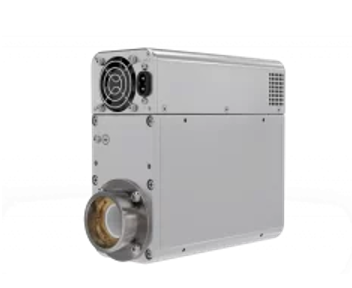
An industrial X-ray system may appear simple from the outside, but the image produced during an inspection depends on several carefully coordinated stages. At the center of this process is the generation of X-rays, where electrical energy is converted into controlled radiation and directed toward a target material. Understanding how this happens makes it easier to see why voltage, current, frequency, thermal management, and source design all matter. Modern systems often rely on precisely engineered components, with an integrated X-ray source manufacturing company developing solutions where multiple source functions work together for dependable operation.
The Role of Electrical Energy
X-ray generation begins with electrical power. The system requires a controlled supply of energy to create the conditions necessary for producing X-rays. Voltage establishes the potential difference that accelerates electrons, while current influences the quantity of electrons moving through the system.
These electrical parameters are not independent. Changes in voltage or current can affect radiation output, image quality, equipment loading, and operating conditions. This is why X-ray systems require carefully matched electrical components rather than simply connecting a source to any available power supply.


Stable electrical control provides the foundation for predictable X-ray generation and helps the equipment operate consistently during repeated inspections.
Creating The Electron Flow
Inside an X-ray tube, electrons are released from a cathode. When sufficient electrical potential is applied, these electrons accelerate toward an anode or target.
The movement is carefully controlled because the energy carried by the electrons determines how effectively X-rays can be produced when they reach the target. The design of the cathode, electron focusing system, and surrounding components therefore affects the efficiency and consistency of the process.
This stage may be invisible to the operator, but it is fundamental to the performance of the entire inspection system.
Accelerating Electrons At High Voltage
High voltage gives electrons the energy required for X-ray production. As the voltage increases, electrons travel toward the target with greater kinetic energy. When they interact with the target material, part of this energy is converted into X-rays.
The remaining energy is largely released as heat, which creates an important engineering challenge. The system must generate sufficient electrical energy for the intended application while controlling the heat produced during operation. This makes choosing reliable high voltage power supply manufacturers an important consideration for consistent X-ray system performance.
Voltage stability is therefore more than an electrical specification. It directly contributes to consistent radiation conditions and repeatable inspection results.
Converting Electron Energy Into X-Rays
When high-speed electrons strike the target, they undergo interactions that produce X-ray photons. Two important mechanisms are involved: bremsstrahlung radiation and characteristic radiation.
Bremsstrahlung occurs when electrons are slowed or deflected by the electric fields surrounding atomic nuclei. Characteristic radiation results when an incoming electron removes an inner-shell electron from a target atom, followed by another electron moving into the vacancy.
The combination of these processes creates the X-ray spectrum used for inspection. The target material and operating conditions influence the characteristics of the generated radiation.
Choosing The Right Target Material
The target material plays an important role in determining how an X-ray source behaves. Different materials have different atomic structures, melting points, thermal characteristics, and radiation properties.
A suitable target must withstand the intense energy deposited by incoming electrons while providing useful X-ray production. In demanding applications, target design must also consider heat transfer, durability, operating life, and the expected workload.
For this reason, source engineering involves much more than generating radiation. It requires balancing physical, electrical, and thermal requirements within a compact system.
Managing Heat During X-Ray Production
Only a small portion of the electron energy striking the target becomes useful X-ray radiation. A significant amount becomes heat. If that heat is not managed properly, excessive temperatures can affect the target, tube components, electrical performance, and operating life.
Cooling methods vary according to system design and application. They may involve conduction, forced air, liquid cooling, or other thermal management approaches.
Effective heat control allows the source to operate within appropriate temperature limits. It also supports consistent performance during inspections where the equipment may need to operate for extended periods. Reliable high voltage X-ray source manufacturers also consider thermal management when designing sources for demanding applications.
Controlling Radiation Through System Settings
Once X-rays are generated, the system needs to produce radiation appropriate for the object being inspected. Different materials and thicknesses may require different operating conditions.
Voltage can influence the penetrating ability of the radiation, while tube current affects the amount of radiation produced. Exposure time also contributes to the overall quantity of radiation reaching the detector.
Finding the appropriate combination is essential. Excessive exposure may reduce practical efficiency or increase unnecessary radiation, while insufficient exposure can make internal features difficult to distinguish.
The Importance of High Frequency Technology
Traditional approaches to generating high voltage can be affected by limitations related to size, regulation, and response. Modern systems increasingly use high frequency electrical designs to improve control over the energy delivered to the X-ray tube.
A high frequency generator X-ray system can use rapid switching techniques to regulate high voltage more efficiently. This approach can support compact equipment design while providing responsive control of electrical output.
High frequency operation can also contribute to improved voltage regulation and more consistent tube operation. These characteristics are valuable in industrial inspection environments where stable imaging conditions are important.
Connect The Source With The Detector
Generating X-rays is only one part of the imaging process. After passing through the object, the radiation reaches a detector that converts differences in transmitted radiation into useful image information.
Dense regions absorb more radiation, while less dense areas allow more radiation to pass through. The detector records these variations, creating contrast that can reveal internal structures, defects, voids, cracks, inclusions, or other features.
Source and detector performance must therefore be considered together. A highly sensitive detector cannot fully compensate for unstable radiation output, just as a well controlled source cannot deliver useful results if the detector lacks adequate resolution.
See also: Why Pre-Employment Screening Matters for Hong Kong Businesses
Conclusion
Understanding X-ray generation reveals why reliable inspection depends on coordinated engineering. Electrical energy must be controlled, electrons must be accelerated, target interactions must be managed, heat must be removed, and radiation must be matched with detector capabilities.
High frequency technology and integrated source designs can provide valuable advantages when they are appropriately matched to the application. For organizations seeking specialized engineering and OEM integration support, high frequency generator X-ray solutions can be considered alongside VJ X-Ray OEM solutions as part of the process of developing dependable X-ray equipment.