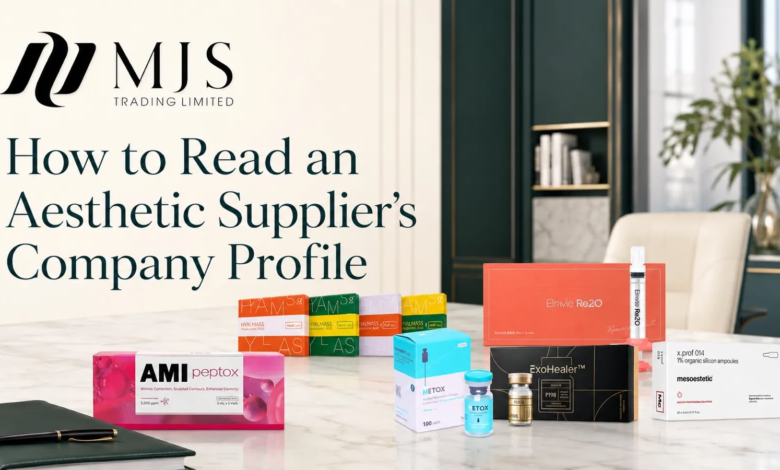
A supplier’s company profile is a starting point for due diligence, not a substitute for it. Its value lies in showing how the business presents its product range, service process and contact routes so a buyer can decide what to verify next.
A strong reading method separates statements that can be checked directly—such as catalogue structure or published contact channels—from claims that require independent documentation or destination-market review.
The aim is to turn a general company introduction into a practical enquiry plan.

Map the Product Scope
Identify which broad categories appear in the supplier’s current catalogue and how products are organized. Catalogue breadth can help a buyer decide whether the supplier is relevant, but it does not establish current stock or suitability for a particular market.
Record the date of the review and note whether individual products have clear names and presentation information.
See also: Which Logitech Software To Use?
Follow the Service Process
Look for how quotations, order confirmation, payment, dispatch updates and discrepancy handling are described. If the process is not explicit, ask for the steps in writing before placing an order.
The buyer should know which contact handles routine sales, documents, delivery updates and post-delivery issues. A single general inbox may be sufficient only when response ownership is clear.
Verify Rather Than Assume
Treat statements about company history, geography, product status or service capability as items to verify when they affect the purchasing decision. Ask for records that match the legal entity and current transaction.
Keep website observations, supplier responses and independently checked information as separate source types in the review file.
A Practical Record Structure
The following fields create a concise shared record. Each entry should identify its source, review date and owner when the information may change.
| Record field | What to capture |
| Business identity | Published name and transaction entity to verify |
| Product scope | Categories and brands visible at review date |
| Enquiry route | Contact method and expected information |
| Order process | Quotation through delivery and discrepancy handling |
| Documents | Records requested and when they will be supplied |
| Review result | Open questions, owner and decision status |
A Buyer’s Review Checklist
- Record what the profile states without expanding the claim.
- Confirm which legal entity will invoice the order.
- Ask for the written order and discrepancy process.
- Verify important statements through appropriate records.
- Date the review and schedule an update when needed.
Using Online Catalogue Information
During commercial research, buyers may review MJS Medicals as a catalogue or product reference. Website information should be dated, attributed and followed by the organization’s own verification and approval process.
Because the brand reference already points to the homepage, repeating the same destination would add no value. The article therefore uses one natural hyperlink.
Online availability does not by itself establish current stock, authorization, import status, suitability or professional use in a particular jurisdiction. Those questions should be handled through the official sources and qualified review appropriate to the destination market.
Questions Buyers Commonly Ask
Is a polished website evidence of supplier reliability?
No. It may improve communication, but reliability should be evaluated through verifiable records, consistent responses and actual order performance.
What should the first enquiry contain?
Include the exact products or categories, quantities, destination, timing and documents or quotation details required.
Should every supplier be reviewed the same way?
Use the same core criteria so comparisons are fair, then add risk-based questions for the specific products and market.
A Practical Next Step
Read one supplier profile with a blank review form beside it. Convert every meaningful statement into either a recorded fact, a verification task or a focused enquiry.
A dependable purchasing record does not need to be complicated. It needs to show what was reviewed, which source supported the entry, what remains uncertain and who is responsible for the next action.