Open the pressure table for one hose grade, and something looks wrong. The quarter-inch size carries 11,250 psi. The two-inch size in that same grade carries 5,000 psi. Same rubber, same wire family, same production line. Most buyers seeing this for the first time assume a typing error somewhere in the catalogue. It is not an error, and the reason behind it changes how you read every hydraulic hose datasheet that crosses your desk.
The answer sits in geometry rather than materials. Bore size affects the load the reinforcement carries, and it does so quickly. Once that relationship clicks, the whole hydraulic hose pressure column starts to make sense. Here is why.
The Load Inside a Hydraulic Hose Grows with Bore Size
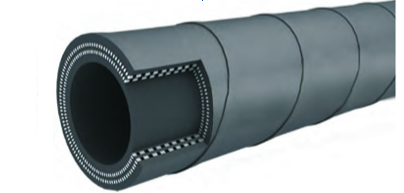
Pressure pushes outward against the hose wall in every direction. The wire reinforcement carries that push. What it has to resist rises in step with the bore.

Double the internal diameter and the reinforcement carries roughly twice the load at the same pressure. The wire count has not moved. Demand on it has. Larger-bore hoses operate at lower working pressures because the reinforcement must resist forces acting over a larger internal area.
See also: How to Choose Bedroom Furniture That Matches Your Lifestyle
Watch what that does to a single wire braid grade:
- 3/16 inch bore: 3,000 psi operating pressure
- 1/2 inch bore: 2,000 psi
- 1 inch bore: 1,000 psi
- 2 inch bore: 375 psi
Ten times the bore, roughly one eighth the pressure. The curve tracks the geometry closely.
Why Single Braid Grades Fall Away Fastest
A single braid grade maintains the same reinforcement construction across the entire size range. One layer of wire, wound the same way, whatever the diameter.
That layer runs out of capacity fast. A single textile braid grade drops from 500 psi at 3/16 inch to 100 psi at 2 inches. Nobody adds material to prop up the number.
That may be obvious. In the middle of a rushed order, it rarely feels obvious.
How Spiral Reinforcement Keeps the Hydraulic Hose Rating Flat
Here is the part that surprises people. Extra-high-pressure spiral grades behave differently.
One extra-high-pressure spiral grade runs at 11,250 psi at quarter-inch and 10,000 psi at 3/8-inch. Then it settles at 5,000 psi from 3/4-inch straight through to 2-inch. The number stops falling.
Geometry did not change. Construction did. Larger sizes in that grade feature six wire spirals instead of four, so extra reinforcement helps maintain the rating.
A four-spiral grade shows the same behaviour. It holds 4,000 psi from 3/8-inch through 1-inch before easing back. Published pressure is a design decision, not a fixed property of the rubber.
Dash Sizes Hide the Bore from You
Ordering by dash number makes it easy to lose sight of the actual bore. A dash size states the inner diameter in sixteenths of an inch, so a -08 hose has a half-inch bore.
Someone reads a pressure figure against a dash number without picturing the diameter behind it. That is usually where the mismatch begins. Write the bore in millimetres on every request and the error rate drops.
End Thrust Loads the Fitting, Not the Hose Wall
A second force works on the assembly, and it scales harder than the first.
Pressure acting on the open bore tries to push the fitting off the hose. That thrust follows area, which grows with the square of the diameter. Four times the bore area means four times the pull on the coupling.
SAE J517 addresses this directly. The maximum working pressure of a hose assembly cannot exceed the lower of the hose’s and connector’s values.
A 5,000-psi hose connected to a 3,000-psi fitting forms a 3,000-psi assembly. The layline will still read 5,000.
Bend Radius Climbs with Bore Too
Pressure is not the only figure moving as you go up the table.
That extra-high-pressure spiral grade requires a minimum bend radius of 127 mm at quarter inch. At 2 inches, it needs 630 mm. Five times the space.
Machine bays rarely grow to match. Force a large-bore hose into a tight radius, and the outer spirals carry a load they were never designed to handle.
What the Published Number Already Carries
The operating pressure on a datasheet is not a burst figure.
SAE J517 sets a minimum 4:1 design factor, so burst pressure is at least 4 times the working pressure. That margin covers spikes, heat and normal ageing. It is not spare capacity waiting to be spent.
Cycling matters as well. Impulse testing typically runs about 1 million cycles at 133 per cent of working pressure, and hard-cycling duty calls for derating.
Reading the Table the Way It Was Written
A published pressure figure describes one hose, at one bore, in one construction, at ambient temperature. Read it that way and the specification becomes a short, repeatable process. Treat it as a single headline number for the whole grade and you end up trusting a value that was never meant to travel across the size range. The table is doing more work than most buyers ask of it.
Ask your supplier for three things together: the pressure column for your bore, the minimum bend radius for that size, and the rating of the fitting going on the end. Three figures, one decision. That habit costs nothing and it keeps the wrong hose off the machine.