Not every ficus bonsai tree for sale is the same species, and the differences between varieties matter far more than most first-time buyers realize. Leaf size, root character, growth speed, and mature appearance all shift depending on which ficus variety you choose, and those differences affect everything from your day-to-day care routine to the long-term styling direction of the tree.
This guide walks through the most commonly available ficus bonsai varieties, what makes each one visually and horticulturally distinct, and how to match a variety to your space, experience level, and aesthetic preference, so you end up with a tree you’ll genuinely enjoy growing, rather than one picked based on a listing photo alone.
Why Variety Selection Matters
Ficus is a large genus, and a simple “ficus bonsai” listing can actually refer to several genuinely different plants. All ficus varieties share the beginner-friendly traits the genus is known for: tolerance of indoor conditions, forgiving watering needs, and fast recovery after pruning. But beyond those shared traits, varieties diverge noticeably in leaf size, root development, growth rate, and mature silhouette. That divergence should factor directly into your buying decision, not just your styling plans down the road.
Common Ficus Bonsai Varieties
Ficus Retusa (Banyan Fig)
Often considered the classic bonsai ficus, Ficus retusa is known for smooth gray bark, small glossy leaves, and a naturally tapering trunk. It readily develops aerial roots, giving it the dramatic “banyan” silhouette that most people associate with tropical bonsai in the first place.
Ficus Microcarpa “Ginseng” (Ginseng Ficus)
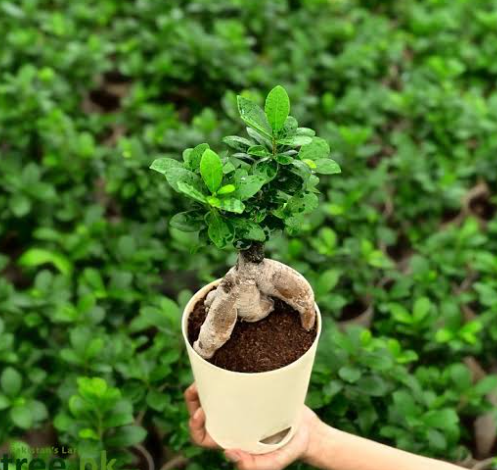
Instantly recognizable by its thick, bulbous exposed roots, actually the upper portion of the root system grown above soil level before potting, Ficus microcarpa “Ginseng” is one of the most widely sold beginner varieties. Its unusual root structure and low care difficulty make it a favorite for first-time buyers and gift purchases alike.
Ficus Benjamina (Weeping Fig)
This variety features smaller, more delicate leaves and a naturally weeping branch habit. It’s somewhat more sensitive to sudden environmental or lighting changes than retusa or microcarpa, putting it a notch higher on the care-difficulty scale, though it remains manageable for an attentive beginner.
Ficus Religiosa (Sacred Fig / Bodhi Tree)
Distinguished by heart-shaped leaves with a signature drip-tip point, Ficus religiosa carries deep cultural and religious significance across several traditions. It also tends to grow more vigorously than other ficus varieties, which means more frequent pruning is needed to keep it in proper bonsai form.
Ficus Panda / Ficus Neriifolia
Less commonly seen but highly valued among experienced growers, this variety produces smaller, denser leaves that naturally reduce further with consistent bonsai training. It’s a strong pick for anyone chasing a more refined, traditional bonsai silhouette.
Variety Comparison at a Glance
| Variety | Leaf Size | Distinctive Feature | Care Difficulty | Best For |
| Ficus Retusa | Small-medium | Aerial roots, classic banyan look | Easy | Beginners wanting a traditional look |
| Ficus Microcarpa “Ginseng” | Small | Thick, bulbous exposed roots | Very Easy | First-time buyers, gift purchases |
| Ficus Benjamina | Small | Delicate weeping branch habit | Moderate | Buyers wanting a softer aesthetic |
| Ficus Religiosa | Medium | Heart-shaped, drip-tip leaves | Moderate | Buyers interested in cultural significance |
| Ficus Panda/Neriifolia | Very small | Naturally dense, refined foliage | Moderate | Growers pursuing detailed styling |
How to Choose the Right Ficus Bonsai Variety for You
If your top priority is the lowest possible maintenance, Ficus microcarpa “Ginseng” is generally the most forgiving option and the variety most widely recommended for absolute beginners.
If you’re after the most classic bonsai aesthetic, Ficus retusa delivers the traditional aerial-root, tapered-trunk look most people picture the moment they think of tropical bonsai.
If leaf delicacy and a softer overall silhouette matter more to you than low maintenance, Ficus benjamina offers a distinct visual character, though it does ask for slightly more consistent care.
If cultural or symbolic meaning is part of what draws you to bonsai in the first place, Ficus religiosa is the variety most closely tied to that tradition, though you’ll need to stay on top of pruning to keep it compact.
If you’re already an experienced grower chasing finer detail, Ficus panda or neriifolia varieties reward more advanced styling techniques with naturally smaller, denser leaves.
Growth Habit and Long-Term Development Differences
Beyond the initial buying decision, it helps to think about how each variety will behave over the years. Ficus retusa and Ficus microcarpa both develop aerial and surface roots that become more dramatic with age, which is part of why they remain the most popular choices for growers chasing that iconic banyan-style appearance. Ficus benjamina’s weeping branch habit tends to become more pronounced as the canopy fills in, rewarding patient, consistent care with an increasingly graceful silhouette. Ficus religiosa’s vigorous growth rate means it will reach a mature, styled shape faster than other varieties, but only if pruning keeps pace with that growth. Ficus panda and neriifolia, by contrast, develop slowly and reward growers who enjoy the incremental, detail-oriented side of bonsai training.
Matching a Variety to Your Growing Conditions
Variety selection isn’t only about appearance and care difficulty; your actual growing environment matters too. Buyers in lower-light indoor spaces tend to have the most success with Ficus microcarpa or retusa, both of which tolerate moderate indoor light better than benjamina, which can drop leaves noticeably when light levels or location change suddenly. If you’re growing in a spot with strong, consistent bright light near a window, Ficus benjamina and religiosa have more room to thrive and show off their natural growth habits. For growers in warmer climates who plan to keep their tree outdoors part of the year, any of these varieties will generally adapt well, since none of the commonly sold ficus bonsai varieties are frost-tolerant and all will need to come indoors before temperatures drop.
Verifying What You’re Actually Buying
Because ficus bonsai varieties are sometimes labeled inconsistently by sellers, it’s worth doing a bit of ficus species verification before finalizing a purchase, especially when buying online where you can’t inspect the plant directly. Comparing a listing’s described leaf shape, root structure, and growth habit against known characteristics for that species can help confirm whether a tree is accurately labeled, or whether “Ficus retusa” and “Ficus microcarpa” are being used interchangeably by a seller who isn’t drawing a clear distinction between the two. Taking the time for this kind of ficus species verification before you buy can save you from disappointment later, particularly if a specific variety’s look or growth habit was the reason you chose that tree in the first place.
See also: Modern Solutions for Automotive Businesses in a Digital Era
Final Thoughts
Choosing the right ficus bonsai variety comes down to being honest about what you actually want from the tree: the lowest possible maintenance, the most classic look, a softer aesthetic, cultural significance, or fine-detail styling potential. Once you know which of those priorities matters most, narrowing down between retusa, microcarpa, benjamina, religiosa, and panda or neriifolia becomes a far more straightforward decision, and one far more likely to result in a bonsai you’ll enjoy growing for years rather than one you outgrow within a season.

