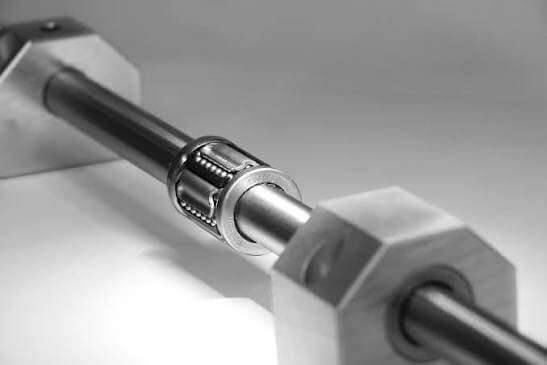
Industrial machinery depends on accurately manufactured components to transfer mechanical power efficiently. Shafts are among the fundamental parts of many drive systems, connecting gears, bearings, couplings, and other components while transmitting rotational force.
For demanding applications, shaft design must account for torque, bending, alignment, material properties, operating speed, and the conditions in which the machinery will operate.
Read Alos: Setting Up Business Energy for New Premises: How to Avoid Overpaying From Day One
Understanding Shaft Function


A shaft provides a rotating connection between mechanical components. During operation, it can experience torsional forces as power is transferred from a motor or gearbox to another part of the machine.
Depending on the application, the shaft may also experience bending forces and axial loads.
Understanding the complete loading condition is therefore essential before selecting or designing a shaft.
Torque and Load Requirements
Torque is one of the primary factors in shaft design. The shaft must withstand the expected operating torque without excessive deformation or failure.
Engineers should also consider peak loads that can occur during startup, stopping, sudden load changes, or equipment jams.
Designing around normal operating conditions alone may not provide sufficient protection against these occasional stresses.
Material Selection
The selected material influences the mechanical properties and manufacturing requirements of a shaft.
Engineers may consider strength, hardness, toughness, wear resistance, machinability, and operating temperature when choosing a material.
In some applications, heat treatment can be used to achieve specific mechanical characteristics.
Surface and Gear Requirements
When a shaft incorporates gear teeth, the gear section requires accurate machining and suitable surface characteristics.
Tooth geometry must correspond with the mating gear. Proper contact between the teeth helps support smooth torque transmission and reduces unnecessary mechanical stress.
The shaft surface may also require finishing processes around bearing seats or other precision interfaces.
Dimensional Accuracy
Shaft dimensions affect how the component connects with surrounding parts.
Important dimensions can include:
- Shaft diameter
- Overall length
- Bearing-seat dimensions
- Keyway or spline dimensions
- Gear diameter
- Gear width
- Shoulder locations
Small dimensional errors can influence alignment and component fit.
Manufacturing and Inspection
Precision shafts may require several manufacturing operations, including turning, milling, gear cutting, grinding, and finishing.
Inspection should verify critical dimensions and surface characteristics.
For gear-integrated components, gear accuracy and tooth geometry should also be checked against the relevant design specifications.
Alignment During Installation
Correct alignment is essential after manufacturing.
The shaft should be properly aligned with bearings, gears, couplings, and other connected components. Misalignment can increase vibration and create additional loads on surrounding parts.
Installation teams should use appropriate measurement and alignment procedures rather than relying only on visual inspection.
Maintenance Requirements
Maintenance teams can monitor shafts and associated drive components for signs of wear or abnormal operation.
Useful indicators include:
- Unusual vibration
- Excessive noise
- Temperature changes
- Gear wear
- Lubrication problems
- Surface damage
- Increased backlash
Early inspection can help identify issues before they affect other components.
For manufacturers evaluating precision components for mechanical transmission systems, pinion shafts can be assessed according to the required torque, dimensions, gear arrangement, and installation conditions.
FAQs
What loads should be considered when designing a shaft?
Engineers should consider torsional, bending, axial, shock, and peak loads according to the machine’s operating cycle.
Why is shaft alignment important?
Alignment helps maintain proper contact between connected components and can reduce unnecessary vibration, wear, and mechanical stress.
What affects shaft service life?
Material properties, loading, manufacturing accuracy, surface condition, lubrication, alignment, operating speed, and maintenance can all influence service life.
Conclusion
Precision shafts provide an essential connection between different parts of industrial drive systems. Their performance depends on suitable materials, accurate dimensions, correct gear geometry, proper manufacturing, alignment, lubrication, and maintenance. By evaluating shaft requirements within the complete mechanical system, engineers can develop more dependable power-transmission arrangements.