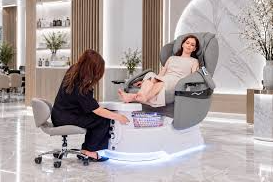
A pedicure chair is one of the hardest-working pieces of furniture in any salon. From the first appointment of the morning to the last client of the evening, it supports person after person, adjusts up and down, holds feet steady, and carries the weight of the whole service. Clients judge the salon by how that chair feels, and therapists judge it by how easy it is to work with. Choosing well is not a small decision; it affects comfort, safety, and the smooth running of every pedicure on the menu.
The first thing a client notices is comfort. A good chair cradles the body with a cushioned seat and a backrest that supports the spine, so the client can relax for the full length of the treatment. The footrests should adjust easily to different heights and leg lengths, and the armrests should sit at a natural height rather than forcing the shoulders up. When clients are comfortable, they sit still, they enjoy the treatment, and they are far more likely to book again. A client who feels at ease is also more likely to try other services the salon offers.
The therapist’s experience matters just as much. A chair that adjusts smoothly lets the therapist bring the client’s feet to a comfortable working height without bending or stretching awkwardly. Controls should be simple to reach and easy to understand, even during a busy day when there is no time to fumble. A chair that fights the therapist slows every appointment down and adds strain to shoulders and backs over time.


Durability is what separates a chair built for home use from one built for a salon. In a busy salon, a chair may be used by many clients every day, adjusted dozens of times, and cleaned just as often. The frame needs to be strong and stable, the moving parts need to hold up under repeated use, and the covering needs to resist wear without cracking or peeling. A chair that looks fine on arrival but starts wobbling after a few months is a poor investment, no matter how attractive the price was.
Salons that see a steady stream of pedicure clients often look for chairs made specifically for heavy daily use, and commercial pedicure chairs are designed with exactly that workload in mind. Their frames, motors, and coverings are built to cope with constant adjustment and cleaning, and they are usually tested to a higher standard than lighter models. For a salon that plans to offer pedicures all day, every day, that extra toughness is what keeps the service running smoothly.
Hygiene and Easy Cleaning
Hygiene is central to pedicure work, so the chair must be easy to clean thoroughly between clients. Smooth surfaces that wipe down quickly are far more practical than textured materials that trap residue. The foot basin, in particular, needs to be simple to empty, rinse, and disinfect, because it comes into direct contact with water and skin. Chairs with fewer crevices and hidden corners make the cleaning routine faster and more reliable.
The water system deserves attention too. Some chairs use a piped water supply, while others are designed to be filled and drained by hand, and each approach has its own cleaning routine. Whichever system the salon chooses, the team should understand it fully and follow the cleaning steps every time. A chair that is simple to keep clean protects clients, and it also protects the salon’s reputation, which is built one appointment at a time. When the routine is easy, the team follows it without being reminded.
See also: How Affordable Supplements Can Help You Achieve a Healthier Lifestyle
What to Look for When Choosing
Before buying, it helps to write down what the salon truly needs. How many pedicures will the chair handle each day? How much space is available, and how will clients get in and out of the chair comfortably? Will the chair be used only for pedicures, or will it also serve for other treatments? Answering these questions narrows the choice quickly and prevents paying for features that will never be used.
It is also worth trying the chair in person before committing. Sit in it, adjust the footrests, test the recline, and imagine a full treatment from both the client’s and the therapist’s side. A chair that feels right in a showroom is far more likely to feel right in daily use. Talking to other salon owners about their experience with a particular model can reveal strengths and weaknesses that no brochure will mention.
Frequently Asked Questions
1. What makes a pedicure chair suitable for a busy salon?
A good salon chair is comfortable for clients, easy for therapists to adjust, and built strongly enough to handle many appointments every day. Its surfaces should also be quick and simple to clean between clients.
2. How important is the foot basin in a pedicure chair?
Very important, because it holds the water the client’s feet soak in. It should be easy to fill, empty, and disinfect, with a shape that lets the client rest their feet comfortably without strain.
3. Should I try a pedicure chair before buying it?
Yes, whenever possible. Sitting in the chair, testing the adjustments, and checking the build quality in person tells you far more than pictures or descriptions alone.
Conclusion
A pedicure chair carries the whole pedicure experience, from the client’s first impression to the therapist’s last adjustment of the day. Choosing a chair that is comfortable, durable, and easy to clean is an investment in the salon’s daily work and in the clients who return again and again. With the right chair in place, every pedicure becomes smoother, calmer, and more enjoyable for everyone involved, and the salon builds a reputation for quality that spreads by word of mouth.