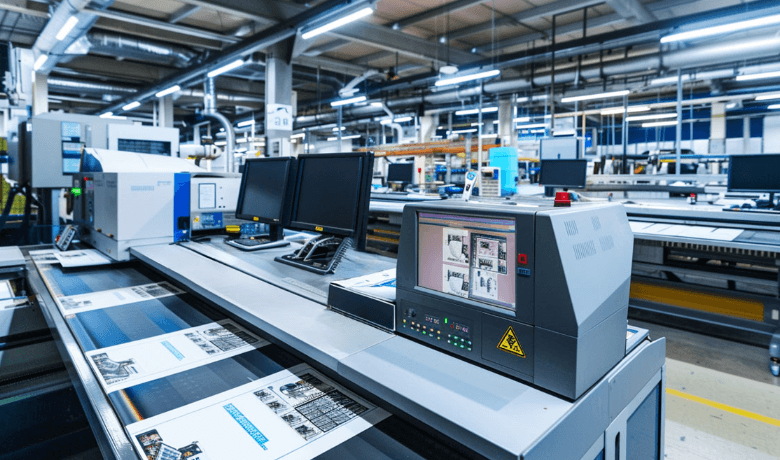
Maintaining consistent quality throughout a printing process requires careful planning, reliable equipment, and effective monitoring. As production lines become faster, manufacturers need quality-control methods that can keep pace without creating unnecessary delays.
Manual inspection can be useful for evaluating samples and making production decisions, but it can become difficult to monitor rapidly moving material continuously. An automated approach can provide additional visibility by examining printed material as it passes through the production line.
A successful implementation requires more than installing cameras. Manufacturers need to consider the production environment, inspection requirements, system integration, operator workflow, and ongoing maintenance.


Start With Clear Quality Objectives
Before implementing an automated inspection solution, a manufacturer should identify what it wants the system to accomplish.
Different printing operations have different quality concerns. Some may focus on registration and graphics, while others may be more concerned with spots, streaks, missing print, or surface imperfections.
Clearly defining these priorities helps determine the appropriate inspection configuration.
A useful starting point is to identify:
- The most common production defects
- The defects with the greatest customer impact
- Where problems typically occur
- How quickly defects need to be identified
- Which materials require inspection
- What information operators need from the system
This creates a practical foundation for the implementation process.
Understand the Existing Production Line
An automated inspection system needs to work with the equipment already installed.
Before installation, manufacturers should review the physical layout of the production line. Available space, material movement, operator access, lighting conditions, and inspection locations can all influence system design.
The inspection point should provide a stable view of the material while allowing operators and maintenance personnel to access relevant equipment.
Understanding the existing workflow can also help prevent unnecessary disruption during installation.
Determine What Needs to Be Inspected
Not every production line requires the same type of inspection.
The material may be paper, film, foil, labels, packaging, or another substrate. Each material can present different visual characteristics.
Manufacturers should determine whether they need to inspect the complete production web or selected areas based on their quality objectives.
The size and nature of expected defects are also important. If very small visual problems need to be identified, the imaging setup may require greater detail than an application focused on larger inconsistencies.
Choosing Appropriate Cameras
Cameras are a central part of automated visual inspection.
The right camera configuration depends on production speed, inspection width, material characteristics, and required image detail.
A high-speed production line needs an imaging setup capable of capturing usable information while the material is moving rapidly.
Camera positioning also matters. The camera must have a clear and stable view of the inspection area.
Rather than focusing on one specification, manufacturers should evaluate the complete imaging setup in relation to their production requirements.
Creating Suitable Lighting Conditions
Lighting is just as important as imaging equipment.
Inconsistent illumination can make inspection more difficult because the camera may see unwanted variations caused by reflections, shadows, or glare.
Different materials can react differently to light. Glossy or reflective surfaces, for example, may require careful consideration of lighting direction and intensity.
A controlled lighting environment helps create more consistent images for software analysis.
Configuring Inspection Software
Once images are captured, inspection software needs to analyze them.
The software can be configured according to the visual characteristics that need to be monitored. Depending on the application, this may involve comparing production images against an approved reference or identifying deviations according to predefined rules.
Proper configuration is important because overly sensitive settings may produce unnecessary alerts, while insufficiently sensitive settings may fail to identify relevant problems.
The goal is to establish inspection parameters that are appropriate for the actual production environment.
Integrating Alerts Into the Operator Workflow
An inspection system is most useful when operators can understand and act on its information.
Alerts should be presented clearly enough for production staff to recognize potential problems quickly.
When an alert appears, the operator may need to examine the material, check machine conditions, or investigate a particular production stage.
A practical workflow should define what happens after an alert is generated.
For example, the process may involve:
- The system detects a potential defect.
- An alert is generated.
- The operator reviews the affected material.
- The possible cause is investigated.
- Production settings are checked or adjusted if necessary.
- The process is monitored to confirm whether the problem has been resolved.
This turns inspection information into an actionable quality-control process.
Monitoring Defects During Production
Continuous monitoring provides an advantage over waiting until the end of a production run.
If a defect appears, the system can help make the problem visible while production is still underway.
This gives operators a better opportunity to respond before the issue affects a larger quantity of material.
The effectiveness of this approach depends on system configuration and how quickly production personnel respond to relevant alerts.
Reducing Material Waste
Waste can increase when defects remain unnoticed for extended periods.
For example, a printing problem that continues for several minutes may affect a substantial amount of material on a high-speed line.
Automated monitoring can shorten the time between defect occurrence and detection.
Earlier awareness gives production teams more opportunity to investigate the cause and potentially limit the amount of affected material.
Although automated inspection cannot prevent every type of waste, it can become an important part of a broader waste-reduction strategy.
Supporting Consistent Production
Consistency is important for products that are manufactured repeatedly.
Customers expect packaging, labels, and other printed materials to maintain a similar appearance throughout an order.
Automated monitoring can help manufacturers identify differences that may otherwise be difficult to detect through occasional sampling.
This can support more stable production and provide quality teams with additional information about how the process is performing.
Using Data for Process Improvement
An inspection system can also provide useful production information.
When defects are recorded over time, manufacturers can analyze recurring patterns.
For example, if a certain type of defect appears repeatedly, the production team may investigate whether it is related to equipment condition, material handling, machine settings, or another process factor.
This approach allows manufacturers to move beyond simply identifying defective material.
Inspection information can become part of a continuous improvement program designed to understand and reduce recurring problems.
Training Production Operators
Even a technically capable inspection system needs knowledgeable users.
Operators should understand how the system works, what different alerts mean, and how to respond when a potential defect is identified.
Training can also help prevent unnecessary production interruptions. If operators understand inspection criteria, they may be better equipped to distinguish important quality issues from acceptable variations.
Regular communication between production, quality, and maintenance teams can further improve the effectiveness of the inspection process.
Maintaining System Performance
Automated inspection equipment requires appropriate maintenance.
Cameras should remain correctly positioned, lighting should remain consistent, and software settings should be reviewed when production requirements change.
Changes to printed designs, materials, machine configurations, or operating conditions may require inspection parameters to be adjusted.
Routine checks can help ensure that the system continues to provide useful information over time.
Integrating Quality Control With Production Goals
Quality control should not be treated as an isolated function.
The best results come when inspection supports broader production objectives such as consistency, efficiency, waste reduction, and customer satisfaction.
An automated inspection solution can provide information that connects these areas.
Manufacturers exploring implementation options can review print inspection systems to better understand how automated inspection can fit into modern printing workflows.
Planning for Future Expansion
Manufacturers should also consider future production requirements when implementing an inspection system.
A business may introduce new materials, additional products, or different printing processes over time. Choosing a flexible approach can make future changes easier to manage.
However, flexibility should be balanced against actual operational needs. A system should solve current quality-control challenges without introducing unnecessary complexity.
Frequently Asked Questions
1. What is the first step when implementing automated inspection?
The first step is to define clear quality objectives. Manufacturers should identify the defects they need to detect, the materials involved, production speeds, and the points where inspection will provide the most value.
2. Why are lighting conditions important?
Consistent lighting helps cameras capture reliable images. Reflections, shadows, and glare can make automated analysis more difficult, particularly with certain material surfaces.
3. Does automated inspection require operator training?
Yes. Operators should understand how to interpret alerts, review potential defects, and respond appropriately. Human expertise remains an important part of an effective automated quality-control process.
See also: How Affordable Supplements Can Help You Achieve a Healthier Lifestyle
Conclusion
Implementing automated inspection in a printing line requires a combination of suitable technology, thoughtful planning, and effective operator involvement. Cameras and software provide continuous monitoring, but the overall system needs to be designed around the specific production environment.
By defining clear quality objectives, selecting appropriate imaging equipment, controlling lighting, configuring inspection software, and integrating alerts into daily workflows, manufacturers can create a more responsive approach to quality control.
The benefits can include earlier defect detection, reduced waste, improved consistency, and better production visibility. With proper maintenance and continuous evaluation, automated inspection can become a valuable part of a modern printing operation and support long-term improvements in manufacturing quality.